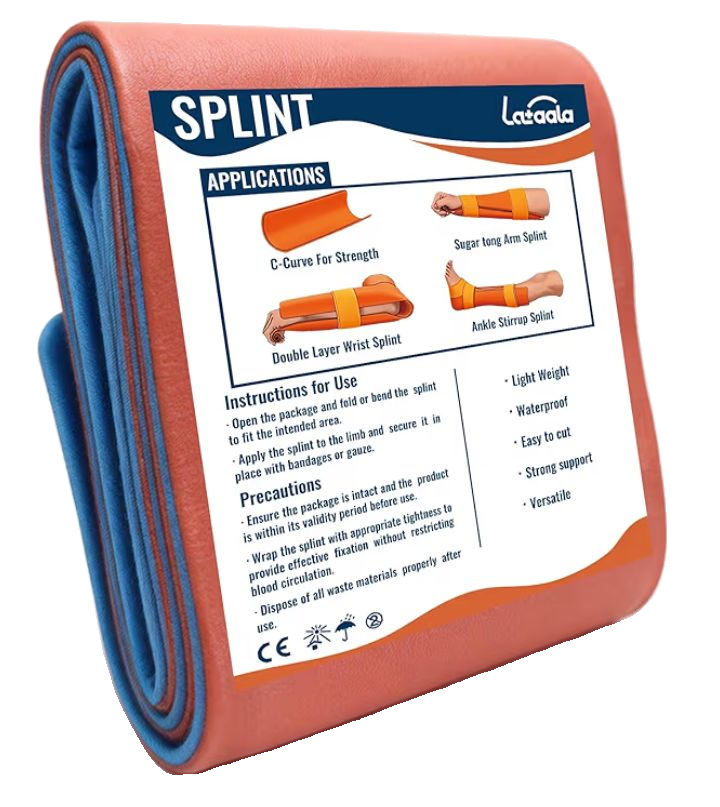
Waterproof Orange Blue Splinting
Waterproof Orange Blue Splinting
What is a Waterproof Orange Blue Splinting?
A waterproof orange blue splinting refers to a modern orthopedic support device designed to immobilize and protect injured bones or joints while allowing exposure to water without damage. The “orange blue” typically describes its high-visibility color design used for safety and identification, especially in outdoor or medical environments. These splints are commonly made from lightweight, breathable, and water-resistant materials such as thermoplastic composites or specialized polymer fabrics.
They are used as an alternative to traditional plaster casts, offering improved comfort, durability, and hygiene for patients who need temporary or semi-long-term immobilization.
How It Works
A waterproof splint works by stabilizing the injured area using a rigid or semi-rigid outer shell combined with soft padding inside. The structure limits movement to allow proper healing of fractures, sprains, or ligament injuries.
Its waterproof design ensures that moisture does not weaken the material or cause skin irritation. Water drains or evaporates quickly due to ventilation channels and quick-dry inner linings, making it suitable for showering or exposure to rain.
Main Benefits
The main advantage of waterproof orange blue splinting is its ability to maintain stability while resisting water damage. It improves patient hygiene since the splint does not need to be covered during bathing.
It also reduces odor, skin infections, and discomfort commonly associated with traditional plaster casts. Its lightweight structure makes daily movement easier and less tiring.
Key Features to Consider
Important features include water resistance level, breathability, weight, adjustability, and durability. A good splint should provide firm immobilization while still allowing slight flexibility for comfort.
Color visibility (orange and blue design) may also help caregivers quickly identify the device, especially in emergency or sports settings.
Where You Can Use It
Waterproof splints are commonly used in hospitals, sports medicine, outdoor injury care, and emergency response situations. They are especially useful for swimmers, athletes, or individuals in wet environments.
They can also be used during travel or fieldwork where exposure to water or humidity is unavoidable.
Battery and Charging
Most waterproof splints do not require batteries or charging because they are mechanical orthopedic devices. However, advanced versions with monitoring sensors or smart healing indicators may include rechargeable components for tracking healing progress or temperature changes.
Ease of Use
These splints are designed for easy application by medical professionals. Some modern versions allow quick fastening using straps or Velcro systems, making them easier to adjust compared to traditional plaster casts.
Patients generally find them more comfortable and less restrictive in daily activities.
Maintenance Tips
To maintain a waterproof splint, it should be rinsed with clean water after exposure to dirt or saltwater. It should then be air-dried naturally.
Avoid using harsh chemicals or direct heat sources for drying. Regular inspection for cracks or loosening straps ensures continued safety and effectiveness.
Pros and Cons
Pros include waterproof protection, lightweight structure, improved hygiene, and higher comfort levels. It also reduces skin complications and is suitable for active lifestyles.
Cons include higher cost compared to traditional casts and limited availability in some regions. In some cases, it may not provide enough rigidity for severe fractures requiring full immobilization.
Who Should Buy It
This type of splint is suitable for athletes, outdoor workers, swimmers, and patients recovering from mild to moderate fractures or sprains. It is also ideal for individuals who require mobility during recovery without risking water damage to the support device.
Final Thoughts
Waterproof orange blue splinting represents a practical advancement in orthopedic care, combining protection, comfort, and water resistance. While not suitable for all types of injuries, it offers significant advantages for active individuals and those needing reliable support in wet or demanding environments.
Reviews
There are no reviews yet.